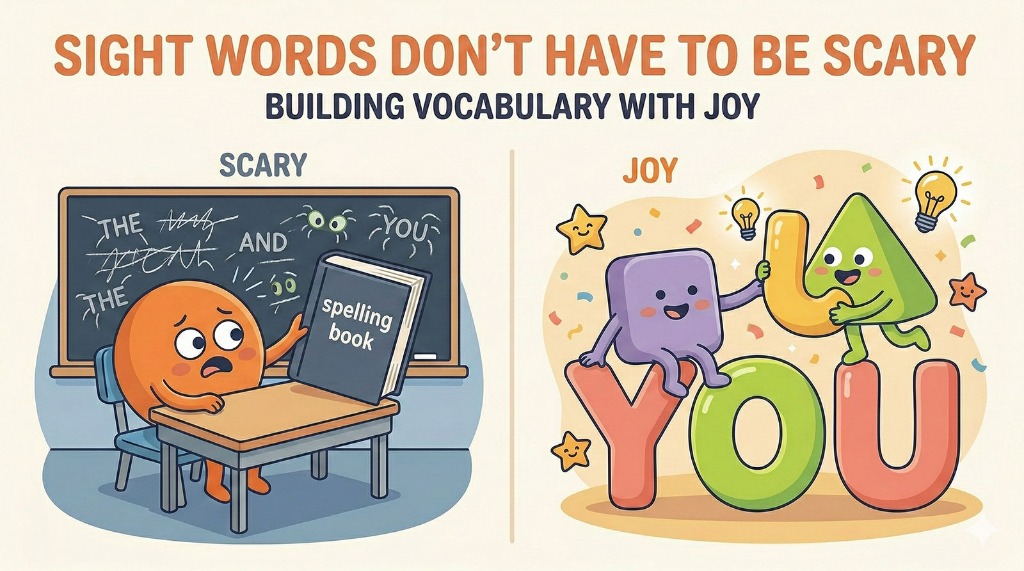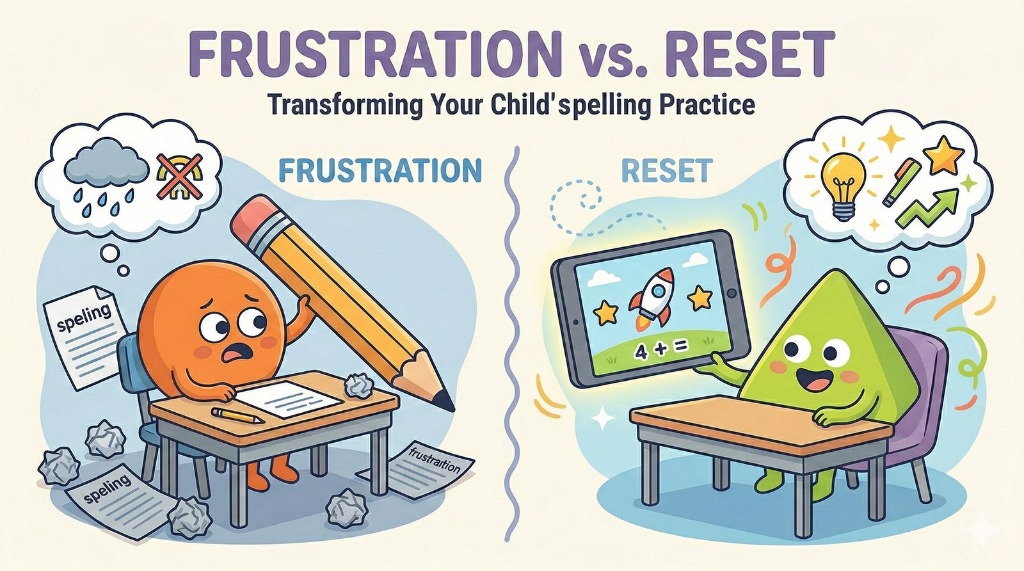
Let’s be honest: the weekly spelling list is often the most dreaded part of the homework packet. "Copy each word 5 times" is a method that has been around for decades, but for many active 7-year-olds, it’s torture.
If your child stares at the paper, cries during practice, or forgets the words immediately after the test, it might be time to change the method.
Why "Drilling" Doesn't Always Work
Writing a word repeatedly builds muscle memory, but it can be disengaging. If the brain is bored, it stops retaining information. The key to mastering spelling is engagement—making the brain want to lock onto the pattern of the letters.
3 High-Energy Spelling Activities
- Window Writing: Let them write their words on a glass window with a dry-erase marker. The novelty alone often breaks the resistance.
- Jump Rope Spelling: Have them jump for every letter they say out loud. "C-A-T!"
- Speed Racing: Use a digital tool like Spelling Bee Race.
In Spelling Bee Race, we removed the pencil entirely. By focusing on identifying the missing letter in a fast-paced environment, children practice phonics and word recognition without the physical fatigue of handwriting. It turns "work" into a challenge they actually want to win.