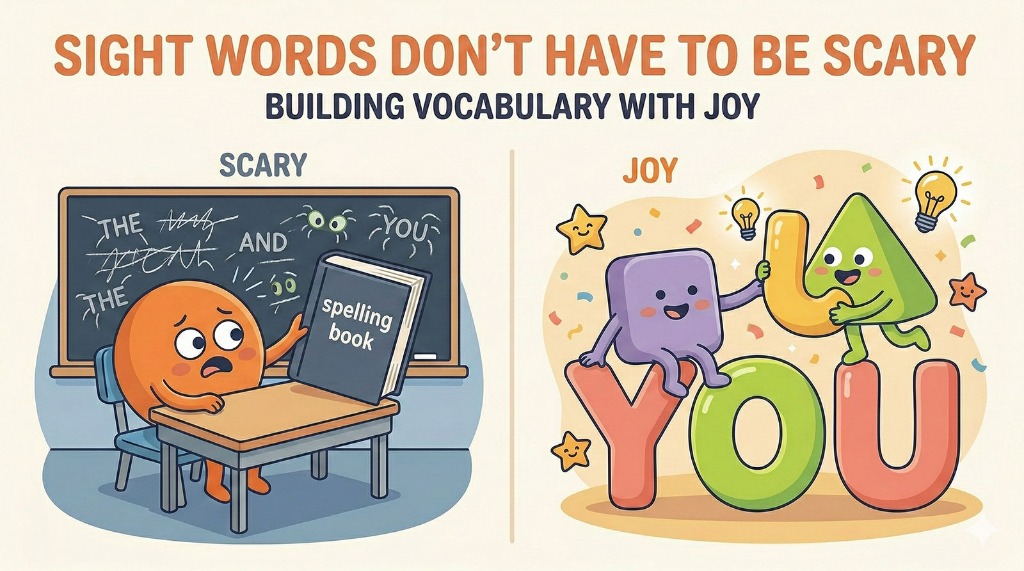
By second grade, the list of "sight words" a child is expected to memorize grows exponentially. Unlike phonetic words that can be sounded out, sight words break the rules. They just have to be memorized, which can be incredibly frustrating for young readers.
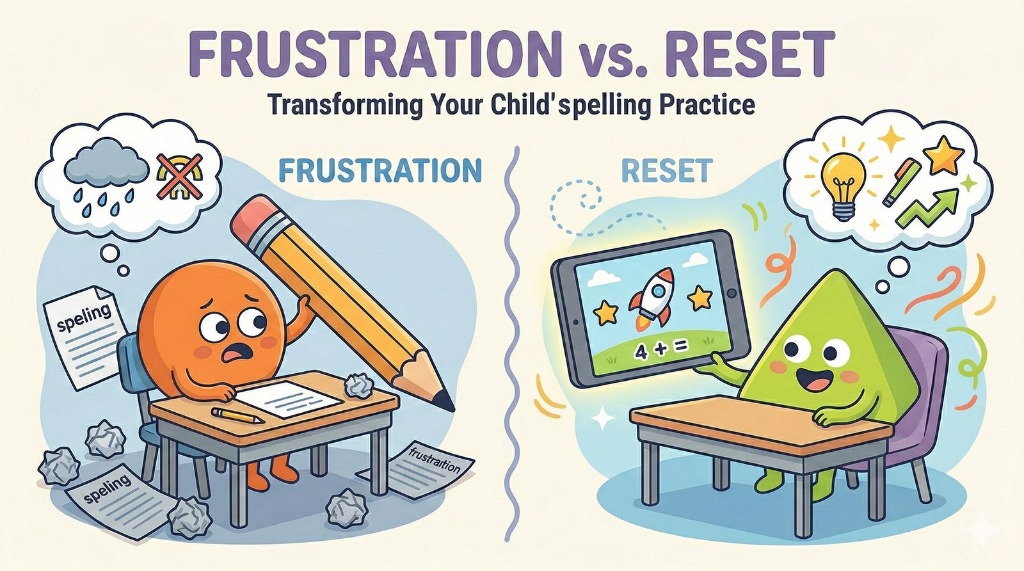
The traditional method is rote memorization: staring at flashcards until the word sticks. But children's brains are wired to learn through play, not pressure.
When you incorporate spelling into an active game—like flying a bee to a sunflower—the child's focus shifts. They are no longer agonizing over the letters in "THOUGH"; they are just trying to find the missing 'U' so they can win the race. By masking the repetition behind a layer of fun, children can practice their sight words ten times longer than they would with physical flashcards.
Take the pressure off sight words and turn them into a game. Fly your bee to the sunflower today in Spelling Bee Race.