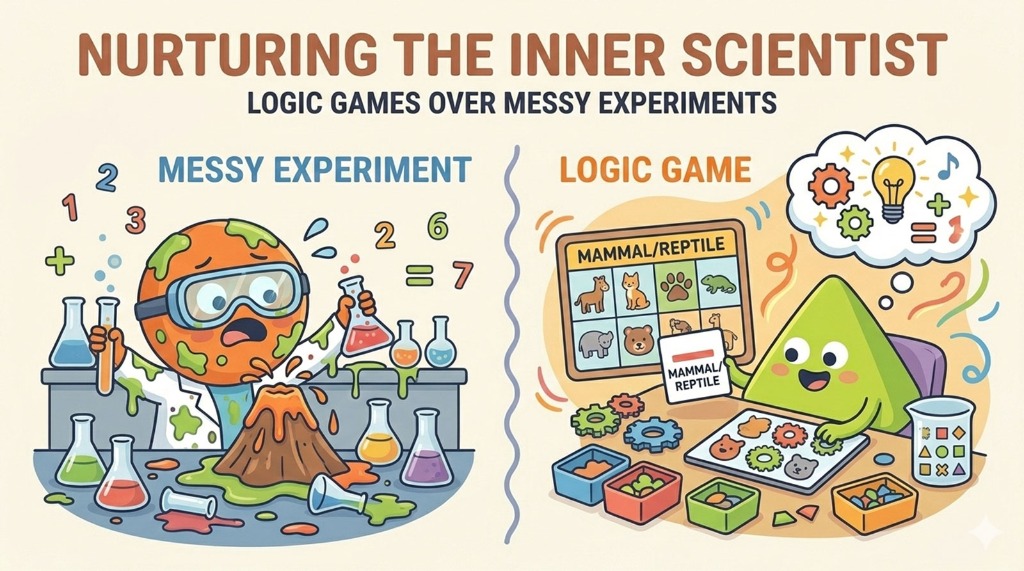
We often think of "science" for 2nd graders as exploding volcanoes or slime kits. While those are fun, the real core of scientific thinking isn't just about messy experiments—it's about logic.
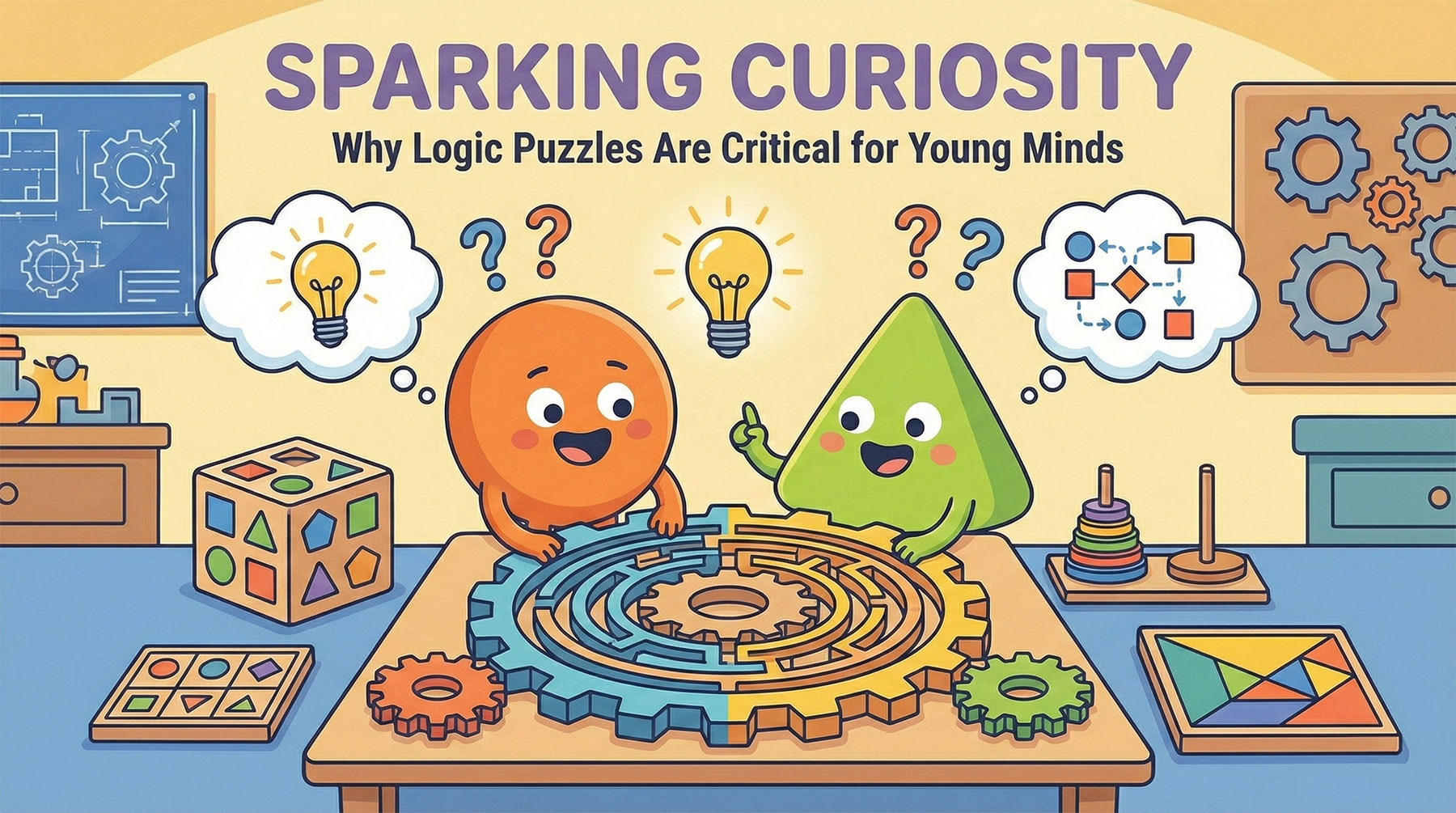
Logic is the ability to look at a set of clues and deduce the correct answer. It is the foundation of coding, engineering, and advanced mathematics. Yet, it is rarely taught explicitly in early elementary school.
How to Build Logic Skills at Home
You don't need a PhD to teach your child to think like a scientist. Here are three simple ways to incorporate logic into your daily routine:
- "Odd One Out": Put four items on the table (e.g., an apple, a banana, an orange, and a red ball). Ask your child which one doesn't belong and why. (Is it the ball because it's not fruit? Or the banana because it's not round?)
- Pattern Recognition: Use LEGO bricks or beads to create a pattern (Red-Blue-Blue-Red) and ask them to predict what comes next.
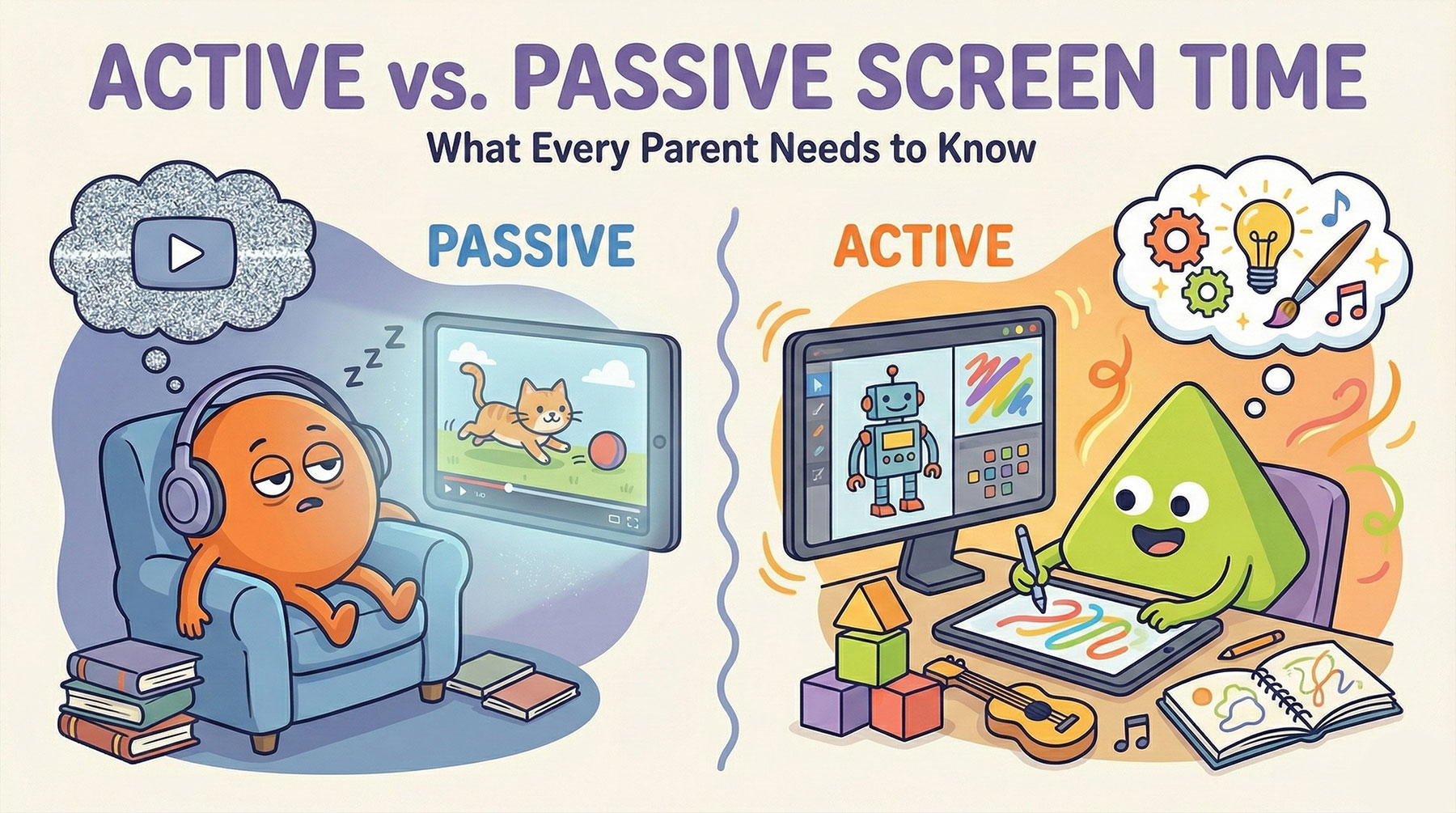
- Digital Sorting Games: Interactive games that require categorization help children organize information mentally.
The "Potion Lab" Approach
At WhizKidWorld, we designed The Potion Lab to bridge the gap between science facts and logical thinking. By answering questions about states of matter and animal classifications to fill a beaker, children practice categorizing the world around them—a key skill for any budding scientist.