If you have a 7 or 8-year-old, you’ve likely noticed a shift in their math homework. It’s no longer just about counting; it’s about fluency—the ability to recall answers quickly and accurately.
For many students, this is where "math anxiety" begins. The pressure of timed tests or endless flashcard drills can shut a child’s brain down before they even start. But there is a better way to build that critical speed without the tears.
The Problem with Rote Memorization
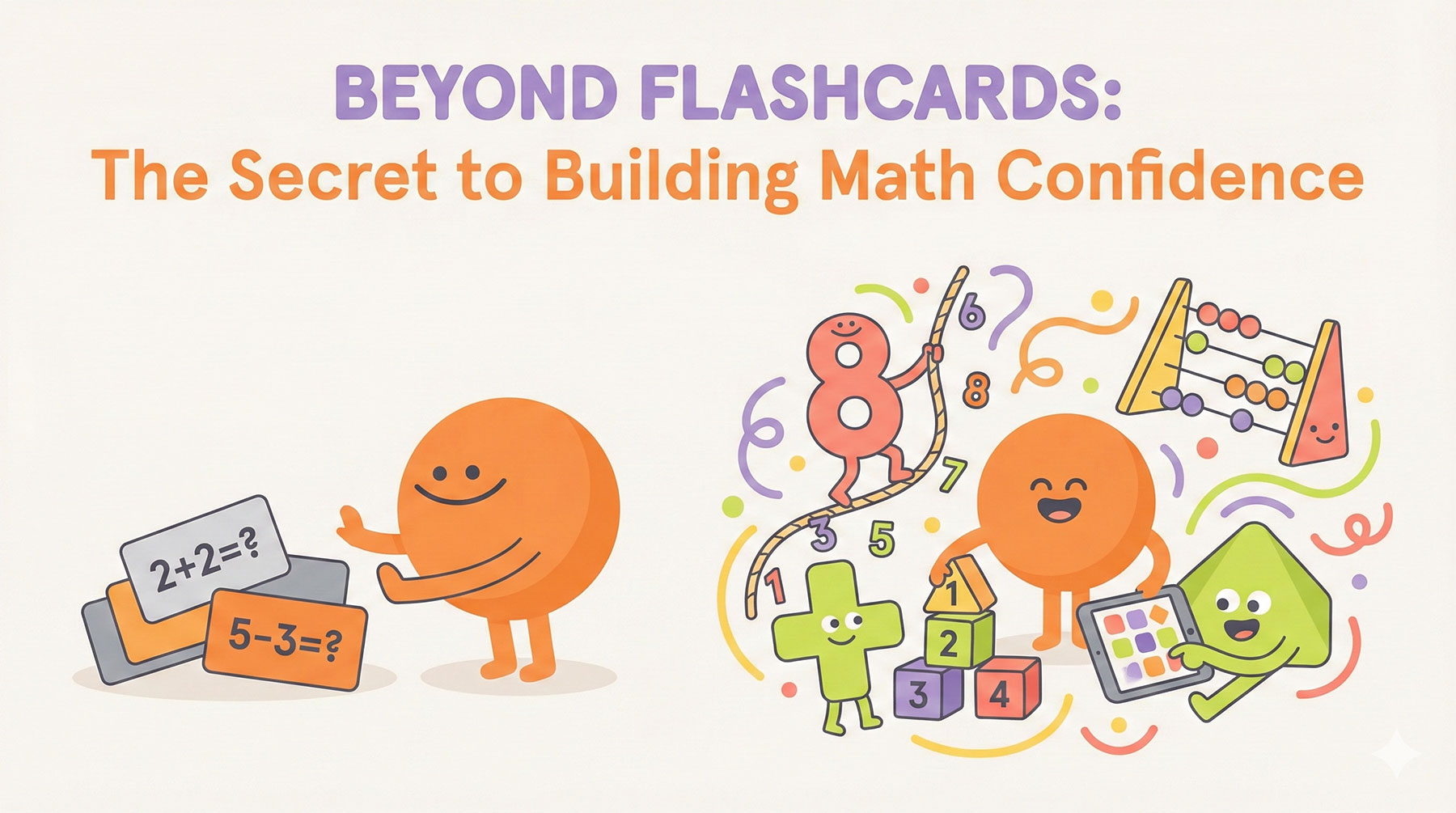
Traditional flashcards rely on rote memorization. While this works for some, for many children it feels abstract and boring. If a child forgets the answer, they panic because they have no visual cue to help them.
The Power of "Gamified" Repetition
This is where game-based learning changes the equation. When a child plays a math game, the goal shifts from "getting the right answer to avoid trouble" to "getting the right answer to win the race."
- Immediate Feedback: Digital games tell a child instantly if they are right or wrong, allowing them to self-correct in real-time.
- Visual Progress: Seeing a character move up a rope or across a track provides a dopamine hit that a worksheet simply cannot offer.
- Low Stakes: Losing a game level feels much less personal than failing a quiz.
Try It Yourself
If your child is struggling with addition or subtraction speed, try swapping 15 minutes of flashcards for 15 minutes of Math Rope Race. You might be surprised to see them asking to "practice" math again tomorrow.