"Screen time" has become a dirty word in parenting circles. We worry about our kids turning into "zombies" in front of tablets. But not all screen time is created equal.
Researchers and educators distinguish between two very different types of digital engagement: Passive and Active.
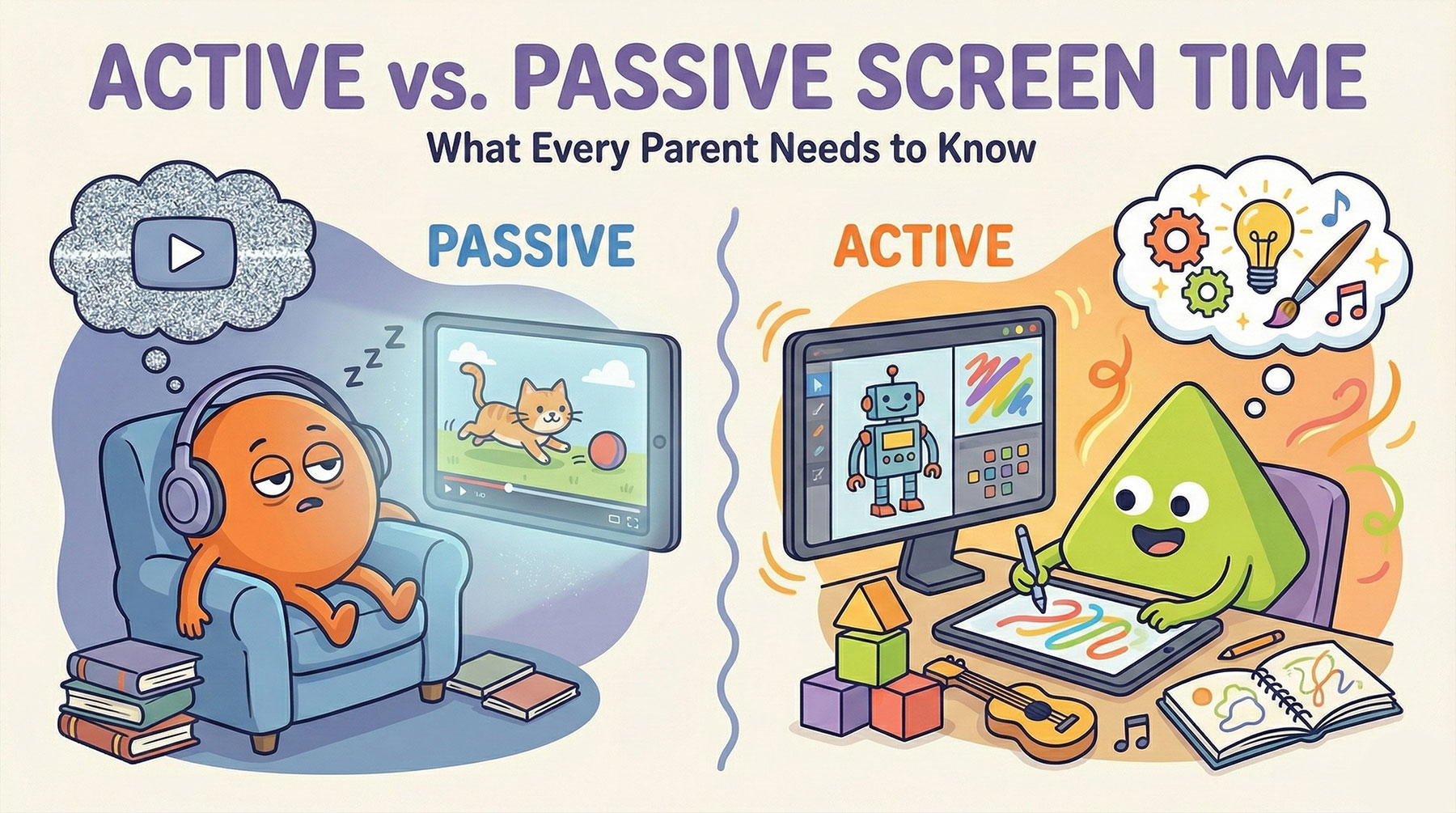
Passive Screen Time
This is consumption. Watching cartoons, scrolling through videos, or staring at unboxing clips on YouTube.
- Brain State: "zoning out."
- Educational Value: Low. The child is an observer.
Active Screen Time
This is creation and interaction. Coding a program, drawing on a tablet, or playing a strategy game.
- Brain State: "leaned in."
- Educational Value: High. The child is a participant.
Making the Switch
The goal isn't necessarily to ban screens, but to curate what is on them. When a child plays a game like Map Master Sprint, they are making constant micro-decisions. They are reading, analyzing, and reacting. This keeps their brain firing in a way that watching a video never will.
Next time you hand over the iPad, try guiding them toward "Active" websites that challenge them to think, solve, and build.